Kagoshima Cruise Port: DIY Sightseeing or a Shore Excursion?
The short answer
DIY sightseeing can work well if you keep the route simple, know your berth and are comfortable managing the return journey. A shore excursion can be worth paying for when you want a guide, several distant stops or transport arranged around your ship. The deciding factors are your actual time ashore, meeting point, language support and return arrangements.
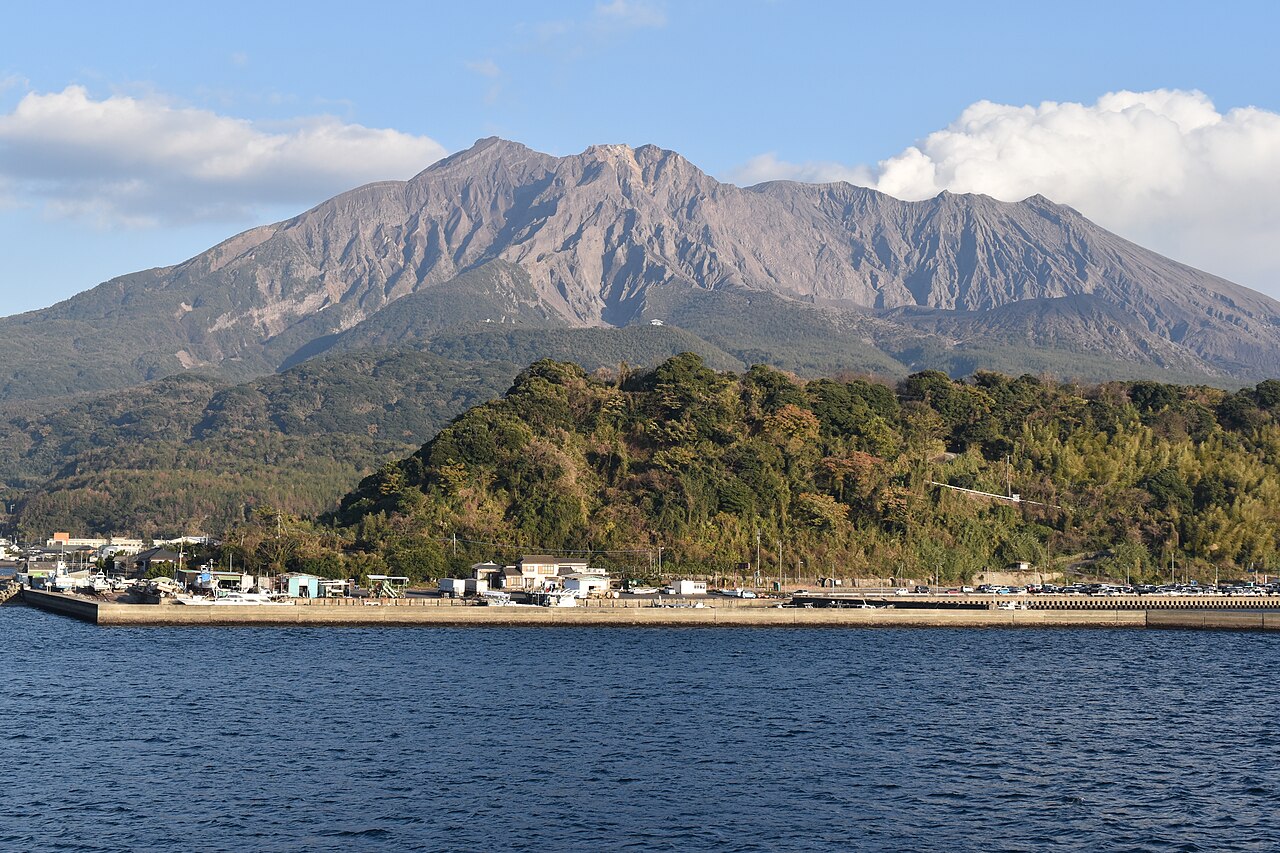
Sakurajima and its waterfront, photographed from the ferry in January 2025.

Start with the berth. “Kagoshima Port” does not identify one universal cruise terminal, and the Sakurajima passenger ferry leaves from a different terminal from Marine Port Kagoshima.
First check where your ship docks
Marine Port Kagoshima is the large cruise facility outside the downtown waterfront. The prefecture describes two berths capable of accepting large cruise ships. Kita-futo, also called the North Wharf in the Honko area, is closer to downtown; the prefecture specifically describes its walkable connection with the city centre. Confirm the assigned berth with your cruise line rather than predicting it from your ship’s size. Marine Port overview · Honko and Kita-futo overview
At Marine Port, the nearest tram stop is not beside the terminal. The prefecture gives approximately 1.2 km from Wakida tram stop or Usuki JR station to the port entrance, followed by roughly another 1 km to the cruise terminal. That is about 2.2 km in total by simple addition, in addition to any tram or train journey. Consider heat, rain, luggage and everyone’s walking needs before choosing this approach. Official access information
Ask your ship about any shuttle, its downtown stop, price and last return. The tourism office says shuttle arrangements vary by ship and warns that taxi queues can form. Its shuttle and taxi FAQ is dated August 2023, so use it to identify questions to ask, not as a current timetable or a promise of a taxi. Marine Port transport guide
Choose the day that matches your priorities
Choose a simple DIY outing if you want a waterfront walk, a meal or one main attraction, and can shorten your plan when transport is slow. You control the pace and do not need to buy a tour merely to step ashore.
Consider a guided excursion if understanding local history matters to you, if several transfers would be tiring, or if you want multiple stops. Compare a private car, a licensed English-speaking guide and a group tour separately: these are different services.
For a tight port call, compare your cruise line’s own excursion terms too. Independently sold excursions should not be assumed to carry the cruise line’s missed-departure arrangements. No itinerary here guarantees that you will get back to your ship.
| Factor | Independent sightseeing | Excursion with confirmed guide or transport |
|---|---|---|
| Best fit | One compact area or one main attraction; flexible pace | Several stops, interpretation or fewer transport arrangements |
| Transport | Arrange both directions and allow for waiting | Verify exact pickup and drop-off; some tours meet downtown |
| Language | Maps, official visitor information and translation as needed | Confirm spoken-English guide separately from written English or a driver |
| Cost | No tour fee; transport, meals and paid admissions still apply | Check total for date and party, plus admissions, ferry and meal exclusions |
| Return planning | Set a turn-back time and a fallback | Confirm timing in writing; independent products do not imply cruise-line protection |
Three useful DIY alternatives
1. Keep the day on the city side
From Kita-futo, a downtown-focused plan avoids adding a ferry crossing. From Marine Port, use the shuttle only if its service has been confirmed, or arrange transport you can reliably reverse. Pick a compact area for a walk and food rather than adding destinations simply because they appear nearby on a regional map.
Walking around a public waterfront or browsing streets does not require a guided-tour fee, although transport, meals and paid attractions still cost money. Choose a turn-back time before leaving the terminal.
2. Cross to Sakurajima and stay close to its ferry terminal
The municipal ferry normally takes about 15 minutes each way. The city’s current fare information lists the adult foot-passenger fare as ¥250 one way. This is the crossing alone: transfers from your cruise berth, queues and waiting time come on top. Check the current service before boarding. Official ferry fares · Operator crossing guidance
A modest route is the ferry, Sakurajima Visitor Center and the nearby Yogan Nagisa Park footbath, followed by the return crossing. The visitor centre’s published hours are 9 am–5 pm and admission is free. The footbath is also free and normally open from 9 am until sunset. Bring a small towel and check for maintenance closures. You can enjoy these stops without buying an excursion; ferry and port transfers remain payable. Visitor centre facilities · Official footbath information
Do not mistake this near-port outing for touring all of Sakurajima. The visitor centre describes a roughly 36 km circuit. A lookout farther inland needs its own transport plan.
3. Make one paid attraction the focus
Sengan-en is an option for a garden-and-history day without trying to fit in everything. Check current admission, opening arrangements and the route from your actual berth. The official city tourism page supplies access information; compare the current options rather than copying an old cruise map. Sengan-en visitor information
What the excursion booking page needs to tell you
The following public listings illustrate different arrangements. They are comparison candidates, not tours we have personally tested. Listed durations are approximate. Prices and available dates must be checked for your party.
- Kagoshima Shore Excursion: Custom Car Tour, Licensed Guide: approximately eight hours, with an explicitly listed English-speaking licensed guide and private vehicle. The pickup section specifies Marine Port pickup and drop-off. Sakurajima ferry fares are extra. An eight-hour product may not fit an eight-hour scheduled port call once disembarkation and all-aboard time are considered.
- Discover the Wonders of Sakurajima Half Day Tour: approximately four and a half hours, offered in English, meeting at the information desk inside the Kagoshima-side Sakurajima Ferry Terminal and finishing at the same place. You must arrange the separate journey between that terminal and your cruise berth.
- Private Shore Excursion Sakurajima and Sengan-en: approximately six hours with pickup offered. Although the page displays English among its languages, the supplier’s May 2026 replies to reviews describe a Japanese-speaking driver, translation-app support and an “English - Written” language setting. Confirm the exact berth and meeting point; do not book it expecting a spoken-English guided tour without written clarification.
The three listing snapshots retrieved on 6 October 2026 stated that cancellation at least 24 hours before the experience qualified for a full refund. Read the selected option’s exact local-time deadline and ask separately what happens if the ship changes its arrival time or skips the port. “Free cancellation” does not, by itself, explain every cruise disruption.
Compare booking conditions before choosing an excursion: select your date and group size, then verify the pickup berth, spoken language, total price, exclusions, return location and cancellation deadline on the booking page. If the details do not match your port call, choose another option or keep the DIY plan.
Work backwards from all aboard
- Write down the ship’s all-aboard time and confirm which clock to use
- Allow for the final journey to the correct berth and terminal access
- Add a buffer for road traffic, queues and ferry disruption that suits the day’s conditions
- Set the latest time you will leave the farthest stop
- Drop a stop if disembarkation or outward travel takes longer than expected
The usable window is shorter than the gap between the published arrival and departure times. Give an excursion provider your ship, date, berth and required return time, and get the arrangement confirmed. Keep the cruise line’s local contact information available offline.
Weather and connectivity
Sakurajima is an active volcano. Follow current local restrictions and transport notices, and be ready to change plans for poor weather or ash. A city-side outing with fewer connections may be more practical when conditions are unsettled. Official Sakurajima visitor overview
Download your route and booking details before leaving the ship. If you want mobile data, first compare your existing roaming plan with a Japan eSIM and check device compatibility and plan coverage. A shore-use eSIM should never be presented as guaranteed connectivity at sea. Connectivity is supporting advice here; the main decision is still the right sightseeing and transport arrangement.
Bottom line
Choose DIY for a manageable route you are happy to shorten. Choose an excursion for clearly specified guiding or transport that fits your sailing. Before paying, compare the conditions, especially the berth, meeting point, spoken language and return plan. Those details matter more than how many sights the title promises.